
The mountains as an opportunity to descend into one's own abyss
Mountains as an opportunity to descend into one's own abyss
DESCRIPTION
The mountains offer many opportunities to people, and that’s only natural. We can admire them comfortably from the valleys and enjoy their beauty. Or we can get closer via the lifts, cable cars, trails, and roads we’ve built. We can also climb them by following a via ferrata or a mountaineering route that takes us all the way to the summit.
No matter how we choose to interact with them, we are compelled at least to look up, if not to go up: climbing seems to be the only possible action.
Personally, I believe that the most intimate experience the mountains allow me to have is that of honestly confronting myself. To do this, one must venture into them in silence and solitude; there must be no distraction whatsoever that might make us feel in the company of or supported by someone else. As I proceed, my senses awaken and emerge from their torpor: dulled in everyday life by a thousand noises and distractions that both disturb and comfort us. When you’re forced to be alone with yourself, you quickly begin to understand what kind of person you are: many discover they can’t stand being alone, and this should serve as a wake-up call to work on it.
Ever since I was a boy, I’ve wanted to explore the places around me on my own: I can’t say why—none of my friends did that. I’ve learned to sense how my anxiety rises when I’m uncomfortable, to try to manage it, and to balance it with the experience I’ve gradually accumulated over the years. When you have to figure out what to do, make important decisions that could have dire consequences if you make a mistake, and you can’t ask anyone for advice, that’s when you can learn a lot about who you truly are. There’s no more room for who you’d like to be, or for the story you might tell about yourself. Lying to yourself in those situations doesn’t serve you, and you have to assess with extreme honesty who you are and what you feel. You’re forced, despite yourself, to look into that abyss that is your true nature—not with contempt, but rather by trying to understand and love every one of your strengths and every one of your limitations.
This experience has a lot to do with descending, not ascending. I open a trapdoor and descend into a universe that isn’t exactly what others see in me. But it’s essential for me to know at least a little about the reality of who I am and to have a precise map of my limitations and insecurities. And we’ll rediscover instinct—which our modern society holds in such low regard—as one of the most valuable guides that can travel with us.
The funny thing I notice about many of those who rightly tell me that you should never go into the mountains alone—that it’s dangerous (and they’re right to say so)—is that, on average, I’m much more cautious and less reckless than they are. When you’ve built up your experience one brick at a time, you’re well aware of the risks and rely solely on your own physical and mental strength; after many years, you become a person who acts prudently within the limits of your abilities.
To be clear, I’ll say it again—I don’t want any misunderstandings: I’m not encouraging anyone to go into the mountains alone. Everyone is responsible for their own actions—or at least they should be—and shouldn’t base their decisions on what others do.
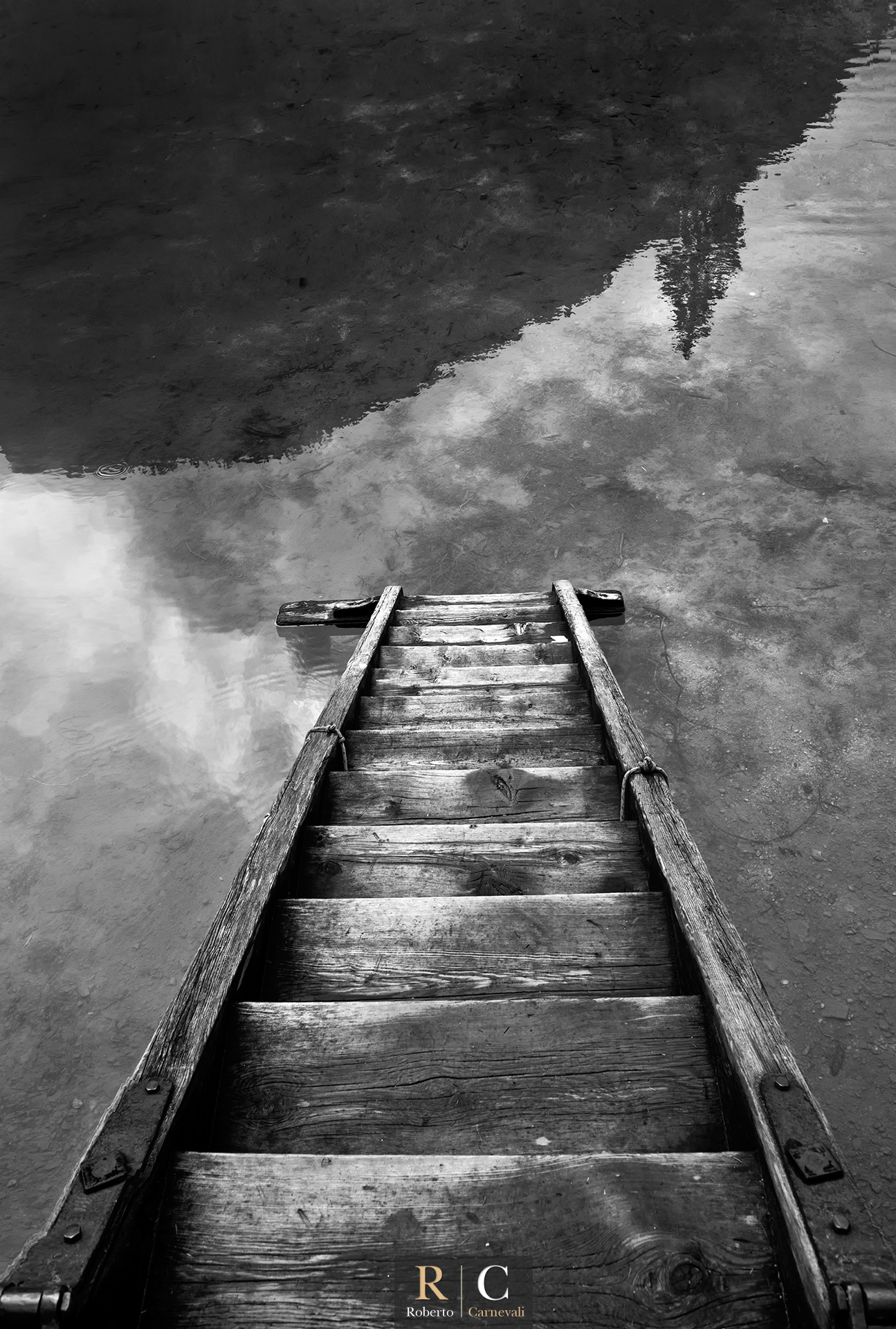
Photo taken at Lake Braies.
DATE AND LOCATION
September 1, 2012
Braies - Upper Puster Valley - South Tyrol - Italy
EQUIPMENT
Nikon D800
Nikkor AF 24-70 G F/2.8